Planning · · 4 min read
How to read a remodeling estimate: scope, allowances and change orders
Two estimates for the same project can look very different. The difference is usually in what each one says it includes.
An estimate for a remodel can be a single page or several. It can look simple or run to dozens of lines. Whichever form it takes, it is the most important document in the project, because it says what you are getting.
Here is how to read one, and what to look for before you sign anything.
Start with the scope
The scope is the description of the work. It is what the price covers. A good scope names each part of the job: demolition, framing, plumbing, electrical, waterproofing, tile, fixtures, paint and clean-up.
A vague scope, such as "remodel bathroom", leaves too much open. A clear one says things like which walls are being tiled, which fixtures are being installed and who supplies them. If a task is not written down, ask whether it is included.
Look for what is not included
Exclusions are as important as inclusions. Common examples are permit fees, furniture moving, disposal of unexpected materials, repairs to hidden damage, and items you are buying yourself. A good estimate lists them.
When you compare two estimates, check whether each covers the same things. A lower number often means a shorter scope.
Understand allowances
An allowance is a set amount for something that has not been chosen yet, such as tile, a faucet or a light fixture. It is a placeholder.
- If you choose something that costs less than the allowance, the difference usually comes off the total.
- If you choose something that costs more, the difference is added.
Allowances are normal, but they should be realistic. A low allowance makes the estimate look smaller and the final bill larger. Ask what kind of product the allowance would buy, and look at samples at that level.
What a change order is
A change order is a written change to the scope after the work has begun. You might decide to add a niche, upgrade the tile or move an outlet. Or something might come up in the work, such as damage behind a wall.
A change order should say what is changing, what it costs and how it affects the schedule, and both sides should agree to it in writing before the work is done. It keeps surprises off the final bill.
Check how payments are organized
Payments are usually tied to stages of the work. Look at the schedule. It should be clear what has to be finished at each stage, and the amounts should relate to the work done. If you are unsure, ask for an explanation.
Ask about the schedule
A good estimate gives a start window and an expected duration. It also says what could change it: permit review, product delivery, inspection dates and hidden conditions. Realistic timing is more useful than a promise that cannot be kept.
Compare two estimates fairly
When you have two or more estimates, put them side by side.
- Is the scope the same? Compare line by line.
- Are the materials equal in quality?
- Are the allowances realistic?
- Who handles permits and inspections?
- What is excluded?
- How are changes handled?
The cheapest estimate is not necessarily the best, and the most expensive is not necessarily the most complete. The one you understand best is usually the one to trust.
How we write ours
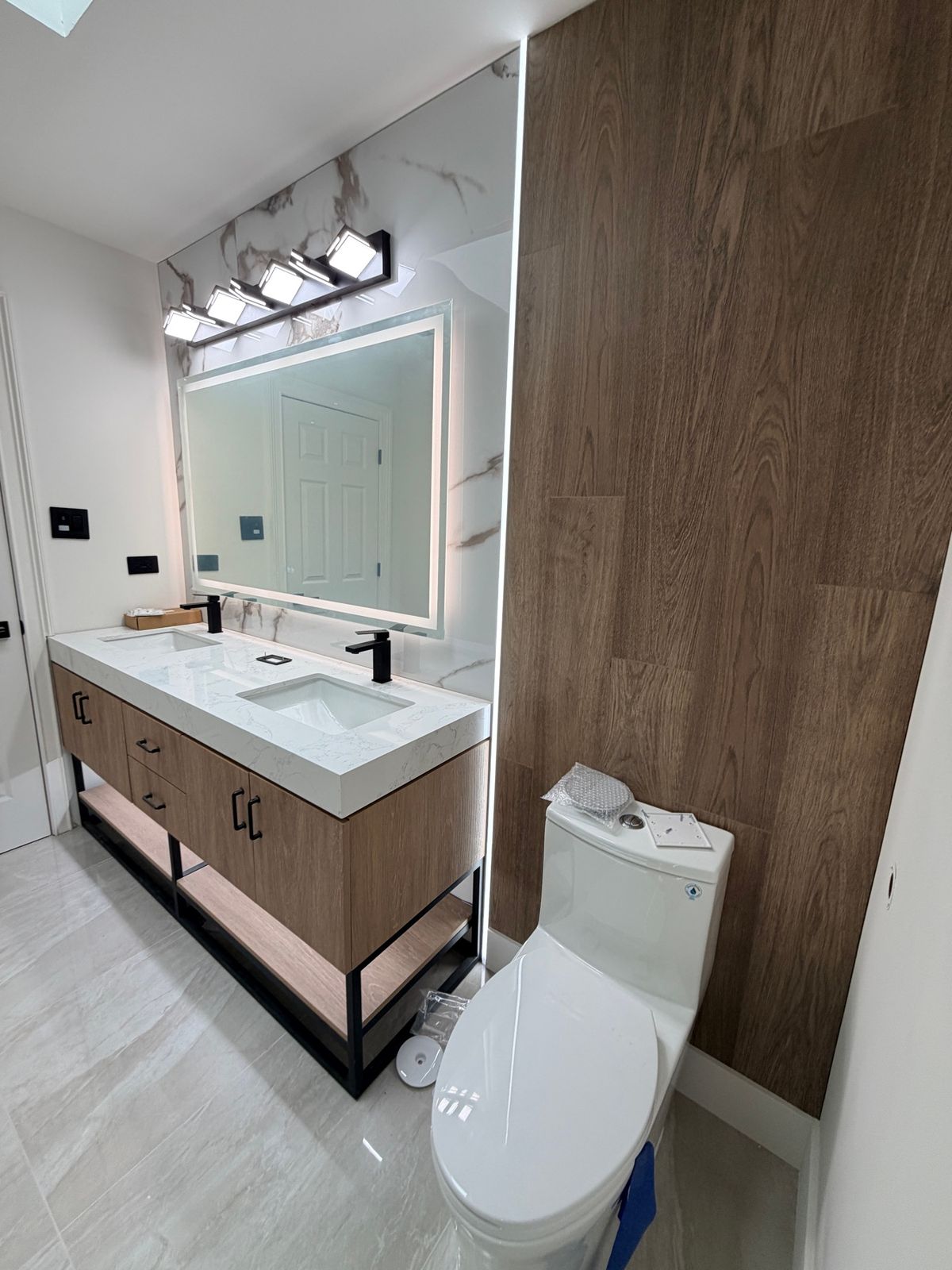
At OVK, an estimate puts the scope and the price in writing. We walk through it with you, explain the parts that are unclear and tell you where an allowance is a guess. The project in a hall bath we finished, with a wood-look accent wall, a wood-tone vanity and a lit mirror, started like any other: with a conversation and a scope on paper.
A note on permits
Where a permit is required, OVK coordinates it. Requirements vary by village, so check with your village building department. See our post on remodel permits for general guidance.
Keep it for later
Once the project starts, the estimate becomes your reference. Keep a copy, and keep each change order with it. When a question comes up in the middle of the job, such as whether something was included, the answer should be written down. Many disputes in remodeling are really memory differences about what was said, and a short written record settles them in a minute. It also helps at the end, when you walk through the finished work and check it against what was agreed.
Talk it through with us
If you have an estimate from someone else and want a second opinion, we are happy to read it with you. See our whole-home renovation page, then request a free estimate.
Questions people ask
What is the difference between an estimate and a contract?
An estimate describes the work and the price. A contract is the agreement you sign. Read both, and make sure the scope matches.
Why do allowances exist?
Because some choices, like tile and fixtures, are not made yet. An allowance holds a place for them in the budget.
What if I want to change something later?
Ask for a written change order that states the change, the cost and the effect on the schedule before the work is done.