Bathrooms · · 4 min read
Tub or walk-in shower: how to choose for your primary bath
Most primary bathrooms can hold one great feature or two good ones. Here is how to decide which way to go.
Almost every primary bathroom remodel starts with the same question: keep the tub, or replace it with a bigger shower? There is no single right answer, but there is a right answer for your household. It comes from how you use the room on an ordinary Tuesday, not from how it looks in a magazine.
This guide walks through the questions we ask homeowners before we draw anything.
Start with how the room is used today
Think about the last month. How many baths did anyone take? How many showers? If the tub has become a place to store towels and bath toys, that tells you something. If someone in the house takes a long bath every weekend, that tells you something too.
Also count the people. A room shared by two adults who get ready at the same time works differently from a room used by one person. Two people often need a shower that is easy to enter and a vanity with room for both.
What a walk-in shower gives you
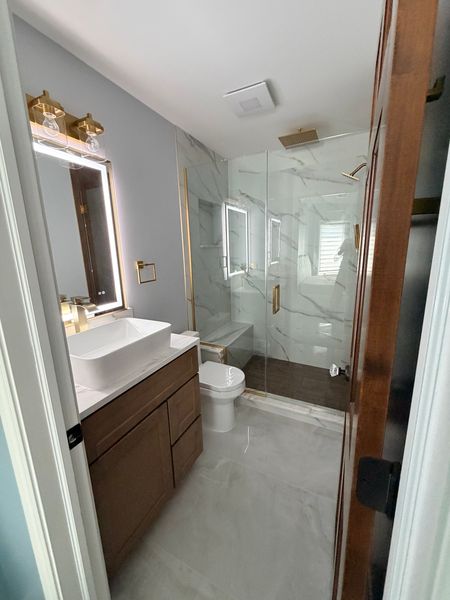
A walk-in shower with glass panels makes a bathroom feel larger because nothing blocks the view across the room. With large tiles and few grout lines, it is also easier to keep clean than a tub surround with a curtain or a framed door.
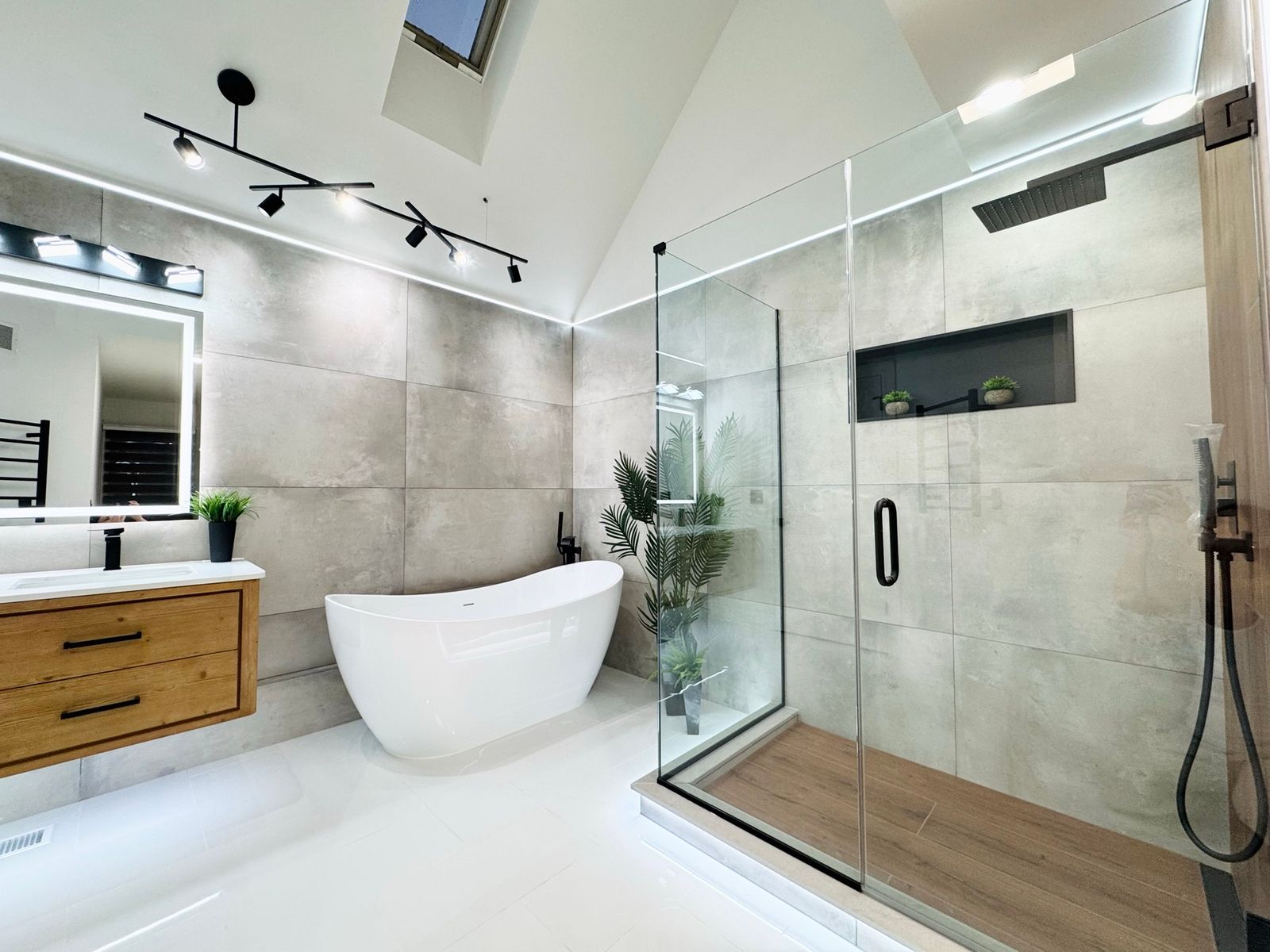
It can also be more comfortable to use. There is no wall to step over, so it suits every age, and it leaves room for a bench, a lit niche and a rain head along with a handheld sprayer. If you want to see how this looks in practice, we replaced an old corner jetted tub with a glass shower in a primary bath we finished.
What a tub gives you
A tub is the only fixture that does one thing a shower cannot: let you lie back. If anyone in the house bathes small children, or soaks after a long day, a tub earns its space.
A freestanding tub is also a design feature. It can stand in front of a window or an alcove and become the focal point of the room. The trade-off is floor space and the need to clean around it, so we check the room dimensions before suggesting one.
When you can have both
In a larger primary bath, a separate walk-in shower and a freestanding tub can share the room. The key is to give each its own zone, with enough floor between them to walk around without squeezing past the glass.
In a smaller room, a tub-shower combination with a clear glass door keeps one fixture doing both jobs. It is a sensible choice for a hall bath or a guest bath, where a second shower would never be used.
Questions that settle it
Before you decide, answer these honestly:
- Will anyone in the house bathe children in the next several years?
- Does anyone have trouble stepping over a tub wall now, or might they later?
- Do you take baths often, or only imagine taking them?
- Will the home be sold in the near future? Buyers in your area may have their own expectations, so a local real estate agent is a good person to ask.
- Does the floor and plumbing layout allow the move you have in mind?
That last question matters more than people expect. Moving a drain or a supply line changes the scope of the work, which is why we always look at the room before talking about cost.
What the work involves
Replacing a tub with a shower means removing the old fixture, rebuilding the floor so it slopes toward the drain, waterproofing the walls and floor, setting tile and installing the glass. Each layer has to be right, because the shower is the part of the bathroom that has to resist water every day.
Cost depends on the size of the shower, the tile, the glass, the drain type and any plumbing changes. Permit rules differ from one village to the next, so ask your village building department what applies to your bathroom. Where a permit is required, OVK coordinates it.
Talk it through with us
If you are still undecided, the easiest way to settle it is to stand in the room with someone who has built a lot of bathrooms. Read more about our bathroom remodeling work, then request a free estimate and we will look at your layout together. We work in Chicago and the surrounding suburbs, including Plainfield, Shorewood, Naperville, Oak Brook and Hinsdale.
Questions people ask
Can I keep my tub and add a shower?
Sometimes. It depends on the size of the room and where the plumbing runs. We look at the layout first and tell you honestly whether both fit.
Is a walk-in shower harder to keep clean than a tub?
Usually it is easier. Large tiles mean fewer grout lines, and glass panels wipe clean faster than a curtain or a track.
Does replacing a tub change the plumbing?
It can. If the drain stays where it is, the work is simpler. Moving it changes the floor and the scope, and we explain that in the estimate.