Planning · · 4 min read
Renovate or move? A practical way to decide
This is not only a money question. It is also about the street, the schools, the commute and how you want to live.
At some point many homeowners look around and ask a hard question: do we fix this house, or find another one? There is no formula that gives the answer. But there is a way of thinking about it that keeps the decision clear.
This is general guidance. For financial or legal questions, speak to the right professional, such as an advisor or a real estate agent. What follows is about the house.
Start with what you love
Write down what you like about where you live. The street, the neighbors, the schools, the commute, the yard, the light in the living room. These are things a renovation cannot create and a move could lose.
Then list what you cannot live with. Be specific. "The kitchen is dated" is a style complaint. "There is no place to sit and eat, and the layout makes cooking with two people impossible" is a real problem.
Sort problems into two groups
- **Things a renovation can fix.** Outdated finishes, a cramped bathroom, a kitchen that does not work, floors that have seen better days, a basement that could be used, a staircase that feels dark.
- **Things only a move can fix.** The location, the size of the lot, the number of bedrooms you can never add, the neighborhood, the commute.
If most of your list falls in the first group, renovating deserves serious attention. If most falls in the second, moving may be the honest answer.
Look at the bones of the house
A house is a good candidate for a renovation when its structure, roof and systems are in decent shape and the layout can be improved. A house with serious hidden problems may be a different story. Before deciding, a home inspector or a contractor can tell you what lies behind the walls.
Compare like with like
When comparing the two options, count everything, not just the obvious costs.
- For renovating: the cost of the work, a reserve for surprises, and a place to live if rooms are out of use.
- For moving: the cost of selling, the cost of buying, moving itself, and changes to your daily life.
- For both: time, stress and what you give up.
We cannot give you figures for your situation, and we will not guess. A written estimate for the renovation gives you one side of the comparison with real numbers, and a real estate professional can help with the other.
Think about timing
Renovating is not instant, but it is more controlled than a move. You decide the pace, the scope and the order. You can do one room now and another later, or all rooms in one project. See our post on living through a renovation for what to expect.
Consider doing it in stages
You do not have to choose between everything and nothing. A common path is to start with the rooms that matter most, usually the kitchen and the bathrooms, then continue as time and budget allow. We plan it so that earlier work does not have to be undone later.
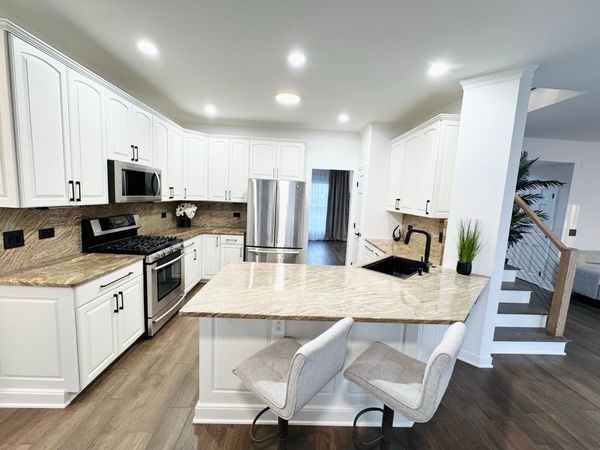
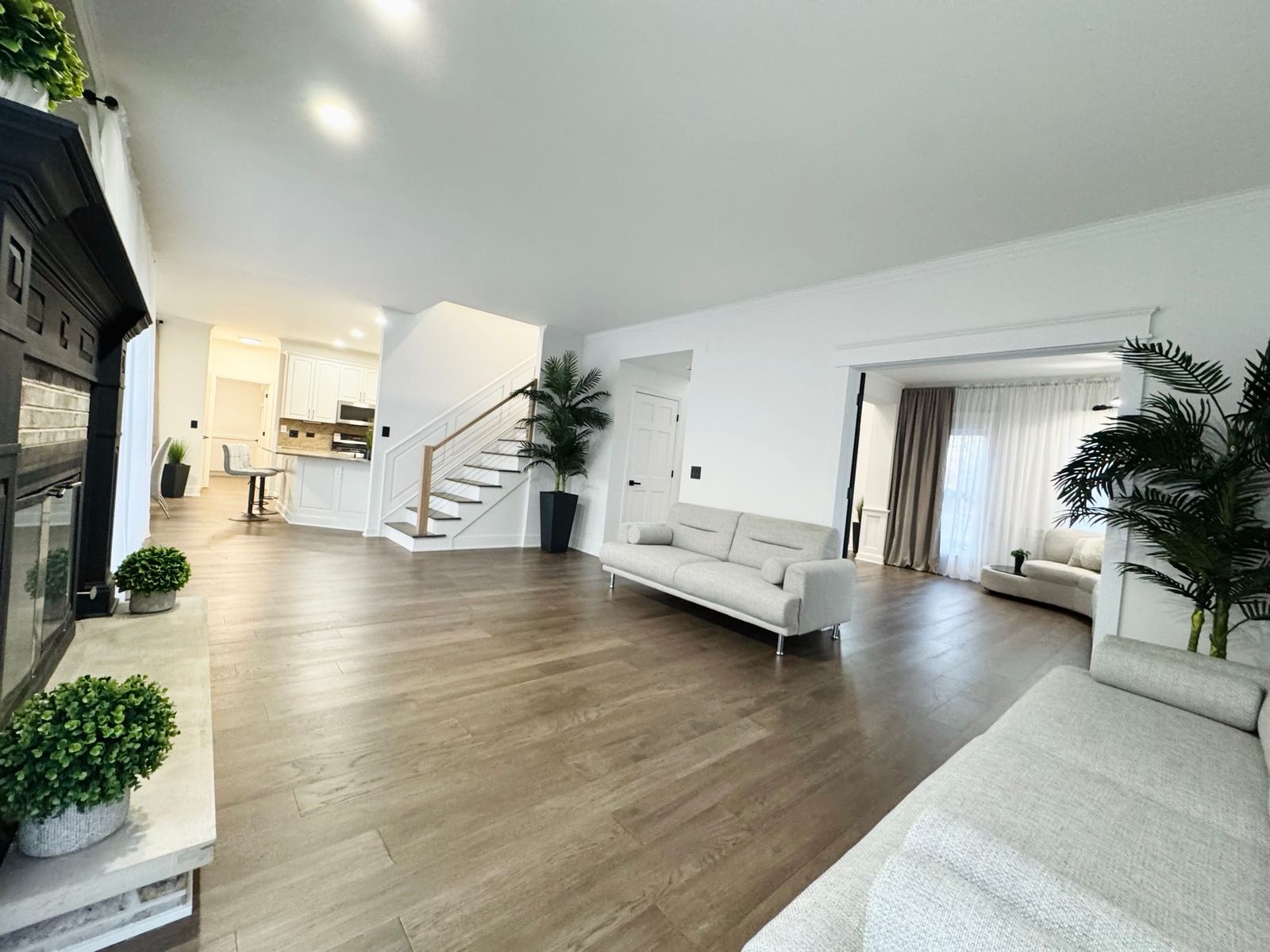
In a house we refreshed, several rooms changed in one project: new plank floors, a black fireplace surround, a white kitchen, white stairs and a lighter bedroom. The living room, which had honey-oak floors and a wood-mantel fireplace, now looks like part of a different house, but the house itself is the same.
A few questions to ask yourself
- If we fixed the three things that bother us most, would we want to stay?
- Do we love the location enough to put up with some compromises?
- Is there anything about the house that no renovation can solve?
- What would we do with the money and the time if we moved?
Talk to people who can advise
Ask a contractor to walk through the house and tell you what is possible. Ask a real estate agent what the market looks like in your area. Ask your financial advisor about the numbers. Each answers a different part of the question.
Talk it through with us
We will give you an honest view of what your house can become and what it would take. See our whole-home renovation page, then request a free estimate. There is no obligation, and a straight answer is part of the visit.
Questions people ask
Does renovating always cost less than moving?
Not always. The answer depends on your house, your plans and the market. A written estimate gives you real numbers for the renovation side.
Can I renovate in stages?
Yes. We plan the order so that earlier work does not have to be undone.
Can you tell me what my house needs before I decide?
Yes. We walk through the house, tell you what is possible and put a scope in writing.