Bathrooms · · 4 min read
Bathroom ventilation: the quiet fix that prevents mold and peeling paint
Moisture has to go somewhere. If it stays in the room, it ends up in your paint, your ceiling and your grout.
Ask people what makes a great bathroom and they will talk about tile, glass and lighting. Almost nobody mentions the fan. Yet a bathroom with poor ventilation will, sooner or later, show it: paint that bubbles, a ceiling with dark spots, grout that never quite dries.
Ventilation is one of the least visible parts of a remodel, and one of the most useful.
What goes wrong without it
A hot shower fills the air with water vapor. That vapor lands on the coolest surfaces in the room, usually the ceiling, the outside wall and the mirror. If the room does not dry out, moisture sits on paint and drywall, and mold and mildew find a place to grow.
The signs are easy to spot once you know them:
- Paint that peels or blisters near the ceiling or around the window
- A mirror that stays fogged long after the shower is off
- Dark spots in corners or along grout lines
- A musty smell that returns after cleaning
- Towels that never seem to dry
Is your fan doing its job?
Many older fans make noise and move very little air. A simple test is to hold a single square of toilet paper against the grille with the fan on. If it hangs on firmly, the fan is pulling air. If it drops or flutters, the fan is weak, blocked or not connected well to a duct.
Also check where it vents. A fan that blows into the attic or the space above the ceiling just moves the problem. The air should be carried through a duct to the outside of the house.
What to ask for in a remodel
When we rebuild a bathroom, we treat the fan as part of the plan, not an afterthought. Here is what we talk through with homeowners.
- **Size to the room.** Fans are rated for how much air they move. A bigger room, or one with a large walk-in shower, needs more than a small powder room.
- **Quiet operation.** A noisy fan is a fan people do not turn on. Quieter models are worth choosing.
- **A proper duct.** A short, straight, well-sealed duct to the outside works far better than a long, kinked one.
- **A sensible switch.** A timer or humidity-sensing control keeps the fan running after you leave, which is when the moisture is still in the air.
- **The right location.** The fan should be near the shower, not at the far end of the room.
Ventilation and a walk-in shower
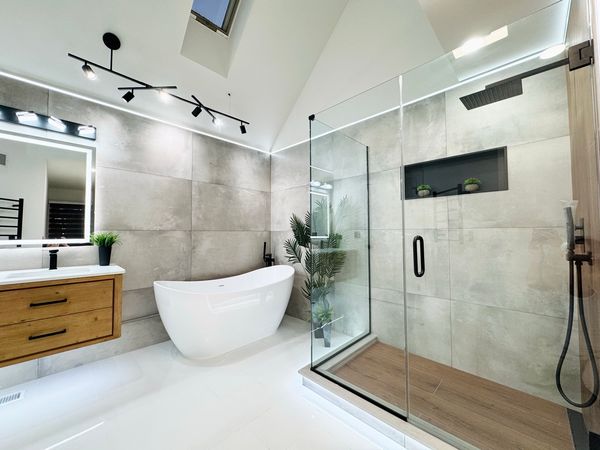
A big glass shower holds a lot of steam, and the ceiling above it takes the brunt. In bathrooms with a large walk-in shower, we often place the fan close to the shower and add a second light or fan control so it is easy to run.
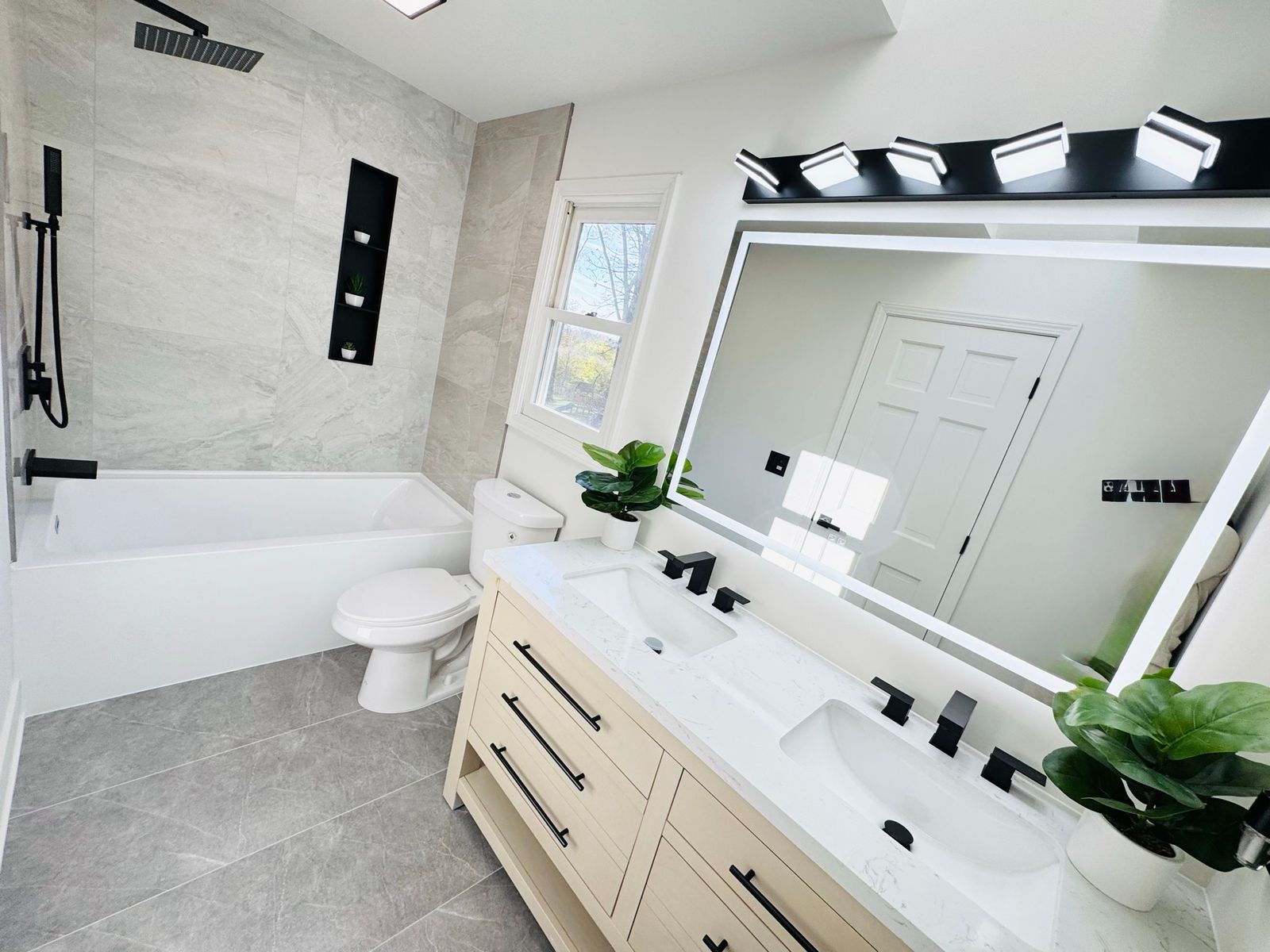
In a bathroom we remodeled with a white double vanity and a large lit mirror, this kind of detail is part of what keeps the walls and ceiling looking fresh long after the work is done.
Windows help, but they are not enough
A window is useful, but it depends on the weather and on someone opening it. In cold months almost nobody does. A fan works every day of the year, which is why it is the part to get right.
Codes and permits
Ventilation requirements for bathrooms vary by village and by the layout of the room. Check with your village building department about what applies to your home. Where a permit is needed for the work, OVK coordinates it.
Keeping it working
Fans collect dust on the grille and in the housing, which slows the air. Vacuum the grille a few times a year and check that the outside vent flap opens when the fan runs.
A note on bathrooms without windows
Interior bathrooms, with no window at all, depend on the fan completely. If yours is one of them, ventilation is not a nice extra but the only way moisture leaves. In that case we pay particular attention to the duct route, the fan size and the control, and we suggest a switch that keeps the fan running for a while after the light goes off. If the route to the outside is long, we talk through the options before the walls go up, because the duct has to be sealed and sloped sensibly to keep water from running back toward the fan.
Talk it through with us
If your bathroom shows any of the signs above, a remodel is a good time to fix the cause rather than just repainting. Read about our bathroom remodeling, then request a free estimate and we will look at the fan, the duct and the walls together.
Questions people ask
How long should I run the bathroom fan?
Long enough to clear the steam, which is usually a while after you leave the room. A timer switch makes this automatic.
Can I add a fan if my bathroom does not have one?
Usually yes. It needs a path for a duct to the outside, and we check that during the visit.
Will a better fan stop mold completely?
It greatly improves the odds by drying the room, but it cannot fix a leak. If you see persistent mold, we look for the source of the moisture first.