Floors and finishing · · 4 min read
Luxury vinyl plank, hardwood or porcelain: choosing floors for a busy family home
There is no perfect floor. There is the floor that handles your family, your pets and your rooms best.
Floors are one of the biggest decisions in a renovation. They cover more of the house than anything else and they take daily wear from shoes, pets, toys and spills. The look matters, but how a floor behaves matters more.
Here is how three popular choices compare in general terms. Individual products vary a lot, so always ask for the maker's care and installation instructions for the exact floor you like.
Luxury vinyl plank
Luxury vinyl plank is a layered floor made to look like wood, and sometimes stone. It comes in long planks that click or glue together.
**Strengths:** It copes well with water, so it is popular for kitchens, basements and entries. It is comfortable and quiet to walk on, and it is easier on dropped dishes than stone. Many products resist scratches well, which suits homes with pets and children.
**Limits:** It cannot be refinished like solid wood. A deep gouge usually means replacing planks. Heavy furniture can dent some products, and strong direct sun can fade some of them. Quality varies widely, so the product matters.
Hardwood
Hardwood is a classic. Solid or engineered wood brings warmth and a look that is hard to copy, and it can be sanded and refinished.
**Strengths:** It ages well, it can be refinished more than once, and it suits living rooms and bedrooms beautifully.
**Limits:** Water is its enemy, especially standing water. It can dent and scratch, and it moves with changes in humidity, which is a reason to check the conditions before choosing it. Basements and bathrooms are usually not the place for it.
Porcelain tile
Porcelain is a dense, hard tile that can look like marble, stone, concrete or wood.
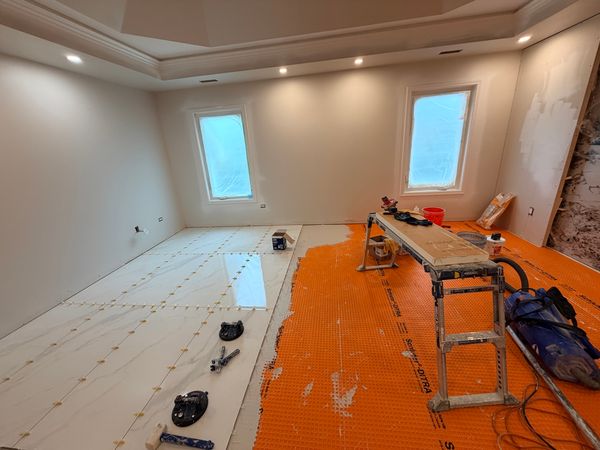
**Strengths:** It is very durable and resists water, stains and most wear. It can run through a whole level with one look, and it works with underfloor heat. Large formats give a calm, seamless appearance.
**Limits:** It is hard and cold underfoot unless heated, and it is unforgiving when something drops. It also needs a flat, stable subfloor and careful installation. Our post on the layers under floor tile explains why.
Matching the floor to the room
- **Kitchen:** Porcelain or luxury vinyl plank handle spills well. Hardwood can work with care.
- **Living areas:** Any of the three suits, depending on the look you want.
- **Bedrooms:** Hardwood or plank floors feel warm, though porcelain with a rug can look elegant.
- **Bathrooms:** Porcelain is the usual choice for wet areas.
- **Basements:** Luxury vinyl plank or porcelain, once moisture has been checked.
A whole-house look
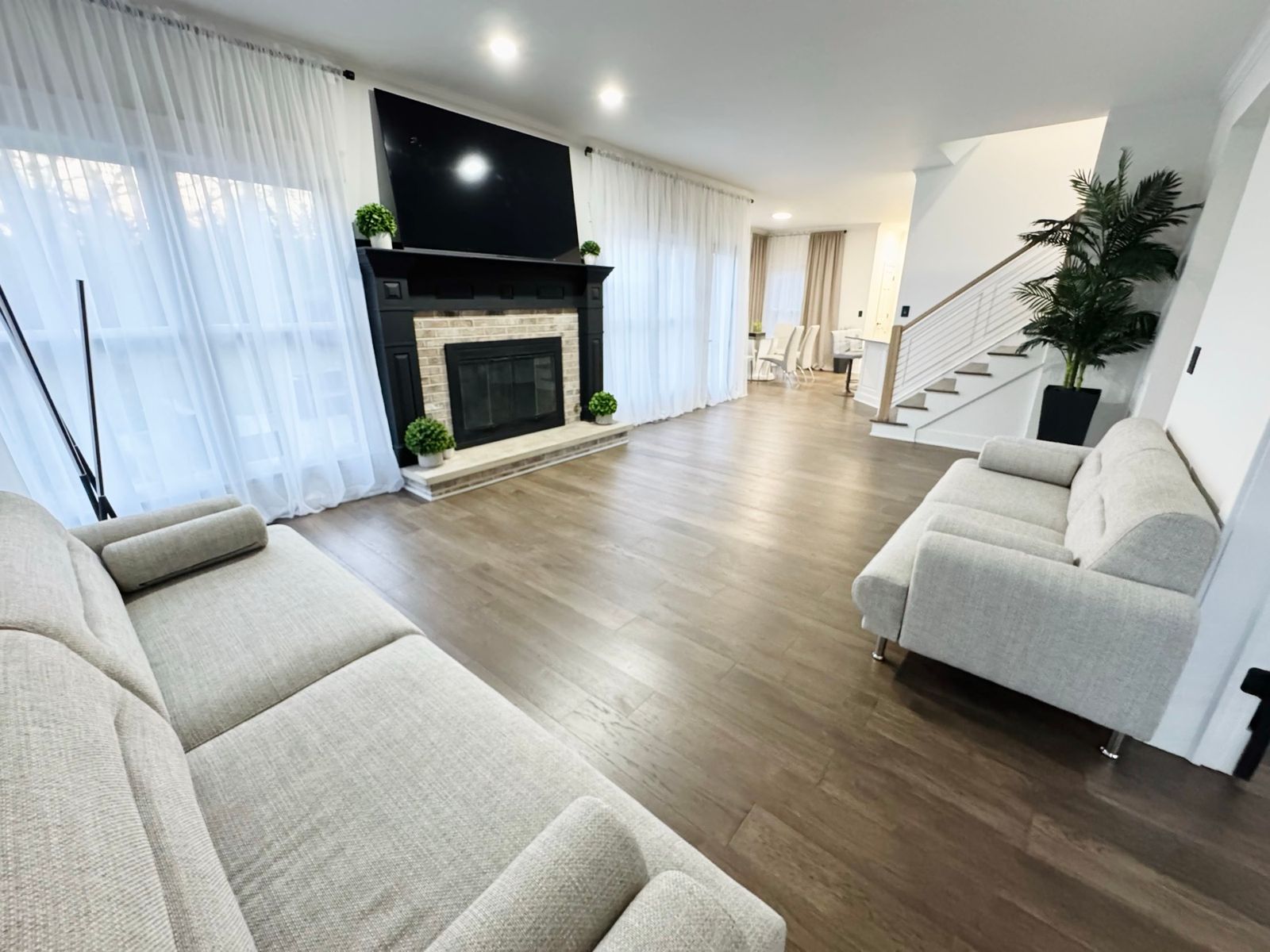
Running one floor through connected rooms makes a home feel larger and calmer. In a house we refreshed, a new plank floor runs through the living room and the bedroom, and ties them together after the orange-toned oak that was there before.
The details that matter
- **Transitions.** Where two floors meet, a clean threshold avoids trips and ugly gaps.
- **Stairs.** Treads need a floor that can be cut and fitted properly.
- **Underlayment.** A layer beneath the floor adds comfort and sound control, and the right type depends on the floor.
- **Acclimation.** Wood and some planks need time in the house before installation, which is why timing matters.
Questions to ask yourself
- Do we have pets, young children or both?
- Are there rooms with water risk?
- Do we want warmth underfoot?
- Will we want to refinish the floor someday?
- Is the subfloor flat and sound, or does it need work?
Cost and timing
What drives cost is the material, the size of the area, the preparation the subfloor needs, the pattern, and the trim and transitions. We explain each of these in the estimate.
Sound and comfort
Floors also change how a house sounds. Hard surfaces such as porcelain carry footsteps and echo, especially in open rooms, while plank floors with a cushioned layer under them are quieter. Rugs help in any case. If your bedrooms are above living spaces, ask about underlayment that reduces noise between floors. Comfort underfoot matters too: some people love the coolness of tile in summer, and others dislike it in winter, which is where heated floors come in. Standing on a sample for a minute tells you more than a brochure does.
Talk it through with us
If you are choosing floors, we can bring samples and look at your rooms. See our flooring and tile page, then request a free estimate.
Questions people ask
Is luxury vinyl plank waterproof?
Many products resist water well, but the seams and the subfloor still matter. Ask for the maker's rating of the exact product.
Can I put hardwood in a basement?
Usually not solid hardwood. Plank products or porcelain suit a basement better, once moisture has been checked.
Will one floor throughout the house work?
Often yes, with sensible transitions in wet areas. We look at each room before recommending it.